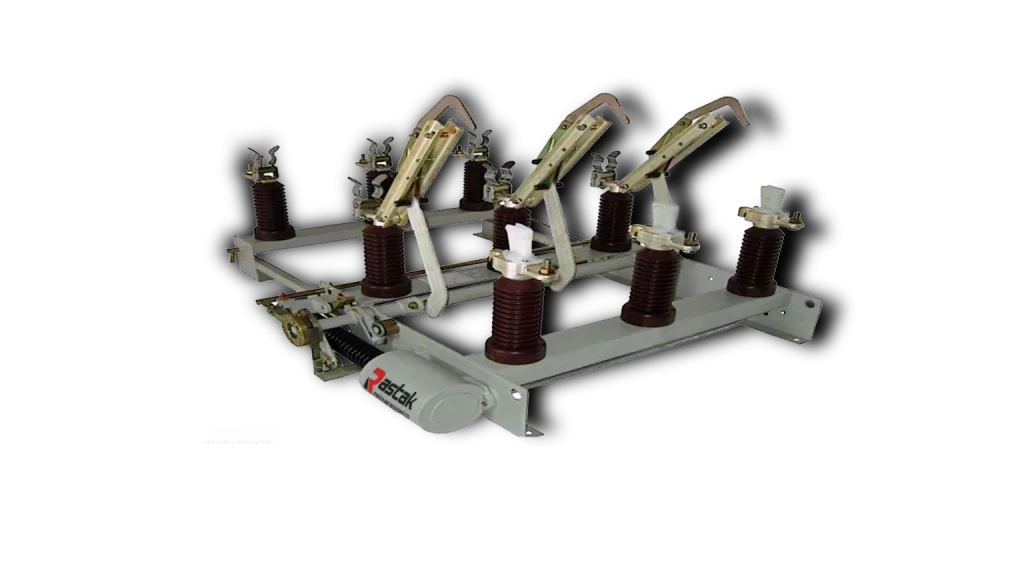
A disconnect switch (Sectionner) is a type of power switch. Unlike circuit breakers, these switches do not contain an arc-quenching chamber, and their blades are fully visible.
Disconnect switches are widely used in the power industry in two main types:
Non-load break disconnect switches – applied in high-voltage systems, where they are only operated when there is no current flow.
Load-break disconnect switches – applied in medium-voltage systems, where they can safely interrupt current under load conditions.

The primary purpose of employing a disconnect switch (sectionner) in a substation is to isolate two different sections from each other. Disconnect switches separate equipment and components that are only under voltage from the main grid.
According to standard electrical regulations, a disconnect switch must be installed in the circuit of each circuit breaker (CB) above 1 kV, or on both sides of a line when it can receive potential from two directions. These switches are essential for line maintenance, isolating circuit breakers, and for changing the direction of current flow (network switching operations).
In many cases, installing a high-speed circuit breaker is not necessary. Moreover, in smaller networks and substations, the installation of a full circuit breaker along with a non-load-break disconnect switch is not cost-effective due to the high expenses it imposes on the system.
In such cases, load-break disconnect switches are used. These switches have a very high closing capacity and can handle currents up to 75 kA. A notable example of this type is the SF6 load-break disconnect switch, which combines efficiency with safety in medium-voltage applications.
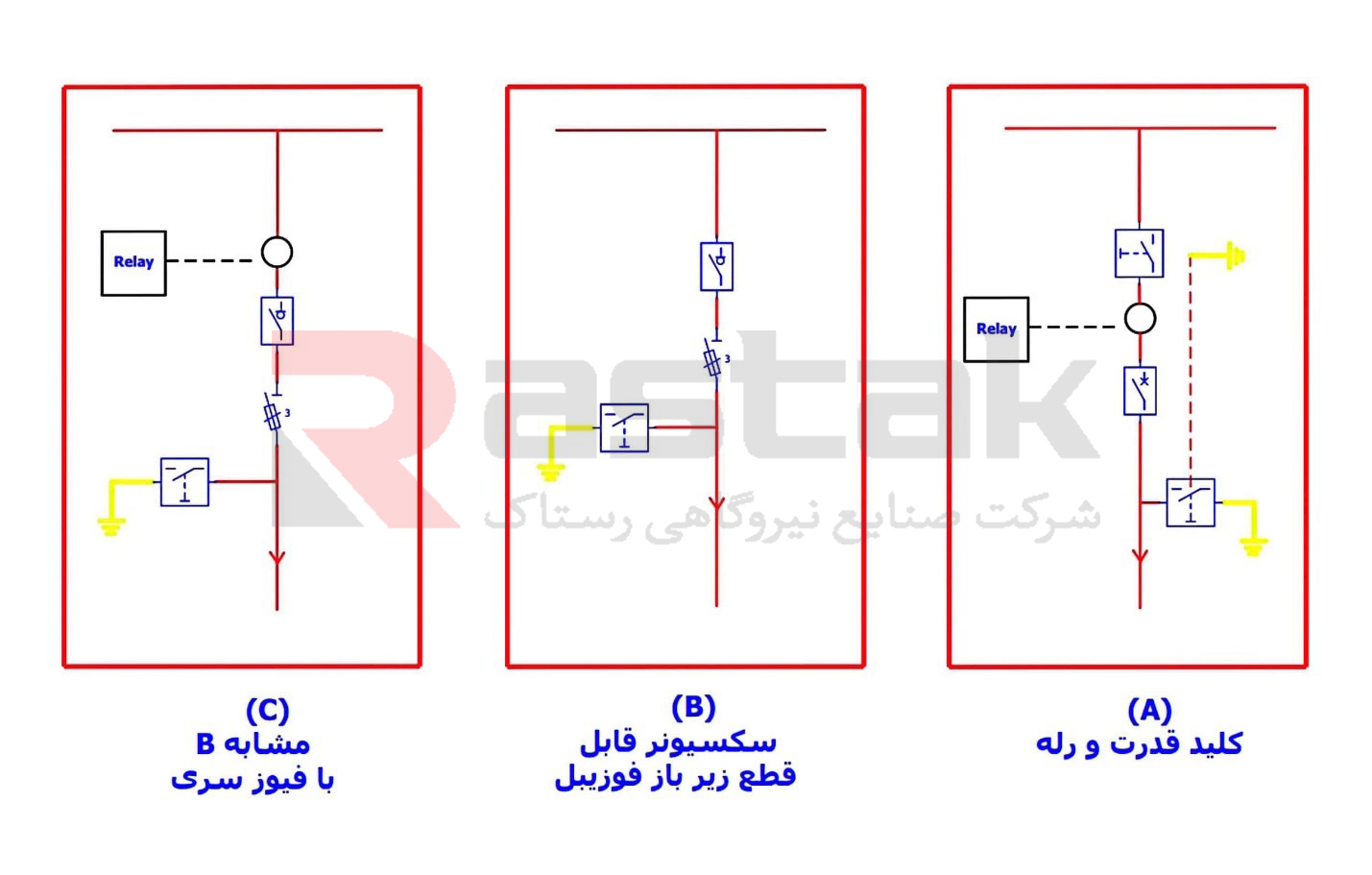
The SF6 load-break disconnect switch combined with a panel-mounted fuse is primarily used for the protection of underground transformers fed by low-capacity cable feeders, particularly in situations where the use of a protective relay is not feasible.
In this configuration:
The disconnect switch functions as a circuit breaker,
While the fuse serves as the protective element for the transformer.
This design provides a reliable, compact, and cost-effective solution for safeguarding distribution transformers in medium-voltage networks.